Intangible Assets: The Engine of Business Growth
How can intangible assets — IP, data, software, know-how, design and collaborative innovation — be turned into real business value and growth? Rather than focusing on IP as a purely legal topic, the event takes a business and strategic perspective. The aim is to explore the full journey from research and technology creation to investment, scaling and commercialisation.
The programme connects research, intellectual property, investment, entrepreneurship, technology transfer, collaboration and design, highlighting how intangible assets can support competitive advantage and sustainable growth.
The conference is organised by Enterprise Estonia, the Estonian Patent Office, and the Estonian universities’ technology and knowledge transfer network.
Registration is open until 5 October 2026.
Conference programme
- How is value created from science and technology?
- What investors really look for in IP and intangible assets?
- How can universities and companies build commercially viable ventures?
- Ownership, protection, licensing and strategic value.
- Creating value while managing IP and ownership.
- How can design strengthen differentiation and commercial success?
Morning: From science to investment – What makes a company investable?
From creating value out of research to building a scalable business, the morning explores what investors look for in technology companies and spin-offs — and why a clear IP strategy, ownership structure and IP readiness are becoming an essential part of investment readiness.
08:45–09:15 Registration & morning coffee
09:15–09:35 Opening remarks by organisers
09:35–09:45 Transition
Moderator: Silja Elunurm
09:45–10:15 Keynote
Stefan Lindeberg (investor, co-founder of Further Than Capital, co-founder Creandum)
A scientific discovery does not automatically create business value. What decisions are needed to turn research, technology and intellectual property into competitive advantage and a scalable business?
10:15–10:45 0 → Scale-up: When Did IP Become a Business Issue?
Graham Bell (Institute for Manufacturing (IfM) Engage, University of Cambridge) in conversation with Merli Üle (TFTAK)
10:45–11:00 Coffee break
11:00–11:30 IP Legal Due Diligence – What Can Make or Break an Investment?
Olivia Kranich (Sorainen)
A practical look at what startups should have in place before investment: IP ownership, contracts and assignments, third-party and open-source rights, freedom to operate, key documentation, and common legal red flags.
11:35–12:30 Panel: From Research to Investment – IP Readiness and Investor Expectations for Spin-offs
Moderator: Sander Õun
Panellists: Dr Florian Kirschenhofer (Max-Planck-Innovation), Anni Port (University of Tartu), Kati Pino (Hedman), Petri-Jaan Lahtvee (co-founder ÄIO)
EstVCA working group insights and international perspective on investor expectations and attractive terms for university spin-offs.
12:30–13:30 Lunch & networking
Afternoon: Beyond IP – Unlocking the Strategic Value of Intangible Assets
The afternoon explores new dimensions of intangible assets — from data, software and collaborative innovation to design and IP — and how companies can integrate them into their business strategy, growth and commercialisation.
13:30–14:15 Data, Software and Algorithms as Intangible Assets
Speaker: Attorney-at-law Priit Lätt (Tegos Legal)
Data vs. databases vs. algorithms vs. software – what can be protected? Ownership of data and AI-generated outputs. Licensing models for software, data and AI. IP management for deep tech companies. Trade secrets vs. patents vs. copyright. Open-source software: opportunities and legal risks. AI development and data governance.
14:15–14:30 Coffee break
14:30–15:45 Academia–Industry Collaboration Models for Innovation
Speaker: Ia Modin (IAM Advokatbyrå) – Co-development and joint innovation projects. University–industry collaboration models. Research and innovation consortia. Ownership of IP in collaborative R&D. Technology transfer and licensing.
15:45–16:00 Coffee break
16:00–16:45 Deep Tech Beyond Technology: The Strategic Value of Design
Speakers: Ainhoa Narváez (ABB Robotics) and AdriánLarripa (PACO Design Collaborative, and Associate Professor at the University of Navarra)
Real-world examples from advanced industrial and technological products, showing how design can contribute to differentiation, IP value and commercial success.
16:45–16:50 Closing remarks
Moderator: Silja Elunurm
16:50–17:30 Networking
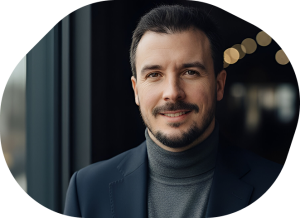 Adrián Larripa is an industrial designer, founder and CEO of the industrial design and product strategy consultancy bigD, co-founder of the PACO Design Collaborative, and Associate Professor at the University of Navarra. With an international career in design engineering and product development, including key roles in Italy and the UK, his work focuses on the intersection of human-centered research, industrial design, and hardware manufacturing. Over the past decade, he has led the design and development of complex industrial machinery and advanced hardware, earning prestigious awards such as the Red Dot Award, iF Design Award, German Design Award, and Good Design Award. He is currently pursuing doctoral research on the integration of Artificial Intelligence into industrial design workflows.
 Stefan Lindeberg is a partner and co-founder of Further Than Capital, where he backs pre-seed tech and deep tech startups across the Nordics. Over the past 25 years, he’s invested in and rolled up his sleeves alongside well over a hundred startups. Before diving into the startup world, Stefan spent the nineties out in the field, helping drive the rollout of internet infrastructure and business development at Cisco. When he left Cisco in late 2000, he became a business angel, and in 2003 co-founded Creandum. Since stepping back from operational roles, he’s returned to what he loves most: being a hands-on angel investor and advisor to a number of early-stage funds.
 Priit Lätt is a partner at law firm TEGOS, renowned expert in IP/IT, tax disputes, and public procurement law. He is a visionary at the intersection of law and technology, guiding both public institutions and tech companies through uncharted legal terrain. He has led landmark cases, including Estonia’s largest software litigation and the country’s first Bitcoin-related lawsuit, shaping legal thinking in the digital era. Beyond litigation, Priit helped draft Estonia’s first standard contract for public-sector software procurement, creating a blueprint for AI and tech agreements nationwide.
 Ia Modin is a Swedish advokat with over twenty years of experience at the intersection of law, innovation, and the commercialisation of intellectual assets. She works with both established companies and growth-oriented enterprises across sectors where intellectual assets are central, including the life sciences and health sectors, metals and mining, deep-tech, energy, pulp and paper, and the creative industries. She also advises innovation intermediaries, government agencies, research institutions, and actors in the innovation support system in both Sweden and abroad.
 Olivia Kranich is Counsel at Sorainen and one of the firm’s leading experts in intellectual property law. She advises clients on a wide range of intellectual property matters, with a particular focus on the film, music, entertainment, technology, life sciences, and healthcare sectors. Olivia helps companies systematically and strategically protect, manage, and enforce their intellectual property rights, while navigating complex legal relationships and developing practical, business-oriented solutions.
 Ainhoa Narváez is the Lead UX Designer at ABB Robotics for AMR Studio®, a software platform that enables users to design, deploy, and operate autonomous mobile robot (AMR) applications. She specializes in translating complex robotics workflows into intuitive digital experiences, helping bridge the gap between advanced technology and user needs. By collaborating closely with engineering, product, and users teams, she applies human-centered design principles to drive usability, adoption, and business value.
 Graham Bell is a technologist with more than 20 years’ experience in IP advisory and 30 years’ extensive experience advising in the development and exploitation of technology. He specialises in issues relating to standards based IPRs, and has published widely on issues of Standards Essential Patents (SEPs), and provides expert technical support to matters relating to licensing, litigation and arbitration of patents, particularly in cellular and wireless standards. Graham Bell is an Industrial Associate with the Institute for Manufacturing (IfM) Engage, University of Cambridge.
 Merli Üle is a business growth and innovation leader with 15+ years of experience turning strategic ideas, technologies and capabilities into commercial results. As Innovation Director at TFTAK, she leads business growth, commercialization and IP strategy in an applied food and biotech R&D organization. Her earlier work spans new business building and transformation at Elisa and Nortal. She focuses on making sound strategic decisions when technology, markets, and business models are still uncertain.
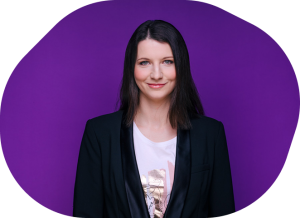 Anni Port runs the Centre for Entrepreneurship and Innovation (EIK) at the University of Tartu — the university’s technology transfer office. Her team handles everything from IP and licensing to spin-off creation and research collaborations with companies. The short version of her job: making sure excellent research doesn’t stay in the lab. Before moving into technology transfer, she spent over ten years building and running her own businesses.
 Kati Pino is a lawyer who specialises in corporate and commercial law with a keen interest in IP matters. She has advised numerous spin-off entities and deep-tech startups during her advisory career. She has considerable knowledge and keen insights into the commercialisation of scientific inventions and partnerships between universities and businesses.
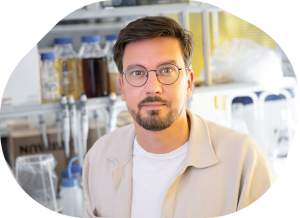 Petri-Jaan Lahtvee is the co-founder and CTO of ÄIO and professor at Tallinn University of Technology, working at the intersection of biotechnology, entrepreneurship, and sustainability. His research and innovation activities focus on using precision fermentation and synthetic biology to develop next-generation bio-based products and manufacturing processes. Through his academic, industrial, and ecosystem-building roles, he helps bridge scientific discovery with commercial impact and the growth of the European bioeconomy.