
Grant for adopting artificial intelligence
We support the testing and adoption of artificial intelligence solutions
The application process for the grant is closed.
Since the amount of grants indicated in the applications in progress exceeds the remaining budget for funding the applications, we closed the application process on August 24, 2026 at 4:00 PM.
Who is the grant intended for?
- The grant is available to companies entered in the Estonian commercial register
- The applicant’s sales revenue for the previous financial year must be at least 200,000 euros
- The grant can be claimed once. If the grant beneficiary is part of a group of companies, the other companies in the group cannot use the grant
- The grant is awarded as de minimis aid (DMA), which must not exceed a total of 300,000 euros over the last three years
Check your company’s DMA balance - The grant cannot be applied for in areas excluded from the de minimis Regulation

What qualifies for the grant?
- Developing an artificial intelligence product or solution and preparing it for market launch
- Integrating artificial intelligence into an existing product, service or process
The results of the activities to be supported must be verifiable at least on the basis of a prototype or test results.
The grant is awarded on a unit price basis in the amount of 20,000 euros.
What will change in my company?
A new artificial intelligence solution is adopted
Greater cost-effectiveness
Productivity growth
Assistance for applicant
Please include the company name, planned activities, investment needs, and a short overview of your idea when contacting us. This helps us assist you more effectively.
Before reaching out, please review the support conditions.
For quick communication, you can find the chatbot in the bottom right corner of the page.
Customer Service
+372 627 9700
[email protected]
Read more about the terms and conditions of the grant in the grant regulation:
Grant regulation(in Estonian)
As part of the project, consider which of the company’s processes need improving and how artificial intelligence could help with this.
Outline the budget required for the activities.
The application must specify the area of data processing to which the project contributes:
a) Analysis: e.g. calculating indicators, synthesizing conclusions and summaries, comparing and interpreting data, identifying trends and patterns;
b) Decision-making: e.g. classifying and categorizing, making substantive decisions based on company rules and criteria, identifying deviations and anomalies, assessing controls and compliance;
c) Planning and forecasting: e.g. optimizing and allocating resources, planning activities and schedules, forecasting based on historical data, simulation, scenario analysis, risk assessment;
d) Data structuring: e.g. extracting structured information from text, speech or images, standardizing and enriching data according to the company’s taxonomy and structured input of data into the company’s information system.
In the description of the project activities section, we expect a clear summary of the activities planned to achieve the result and a detailed description of the use case for implementing artificial intelligence.
Please refer to the attached guide to implementing artificial intelligence and examples of use cases (in Estonian).
Read more about applying grant in Estonian here
When preparing the project, it is advisable to consult with specialists from the AI & Robotics Estonia (AIRE), who can help you consider whether and which company processes can be made more efficient using artificial intelligence solutions (AIRE – Services).
The application can be compiled and submitted in the online E-toetus environment
Grant can be applied only in Estonian language.
Find more information about the previous projects and the grants they received here:

News
Explore
Estonia has long planned how to use land and sea, but beneath the surface lies another layer of space with largely untapped potential for innovation and new business. According to Kati Kongi, Head of the Research, Development and Innovation Department at Enterprise Estonia, Estonia already has a strong foundation for exploring this potential. Former mines, existing underground infrastructure and new developments such as Zero Terrain in Paldiski create opportunities ranging from energy storage and data centres to circular economy solutions and resilient critical infrastructure. However, there is no one-size-fits-all solution. Every location comes with its own geological conditions, technical constraints

What if underground infrastructure built for one purpose could create opportunities for several others? For Andres Veske, CEO of Zero Terrain, this is one of the key questions behind the company’s involvement in the Underground Innovation Hackathon. Zero Terrain develops underground pumped hydro storage, where energy is stored by moving water between reservoirs. Its flagship Energiasalv project in Paldiski is a 500 MW / 15 GWh underground energy storage facility and an EU Project of Common Interest (PCI). The lower reservoir is planned deep in the bedrock, at around 600 metres below ground. The project requires extensive underground infrastructure, including
Enterprise Estonia (EIS) is inviting international teams to take part in the first Underground Innovation Hackathon, aimed at developing new technologies and business opportunities for the use of underground space. Applications are open until 23 November. The hackathon brings together entrepreneurs, researchers and experts from different fields to develop ideas that can grow into real-world projects and businesses. Underground space is not just about mines, tunnels and utility networks. It increasingly offers opportunities for energy storage, data centres, circular economy solutions and strengthening the resilience of critical infrastructure. At the heart of the hackathon is one question: how can we
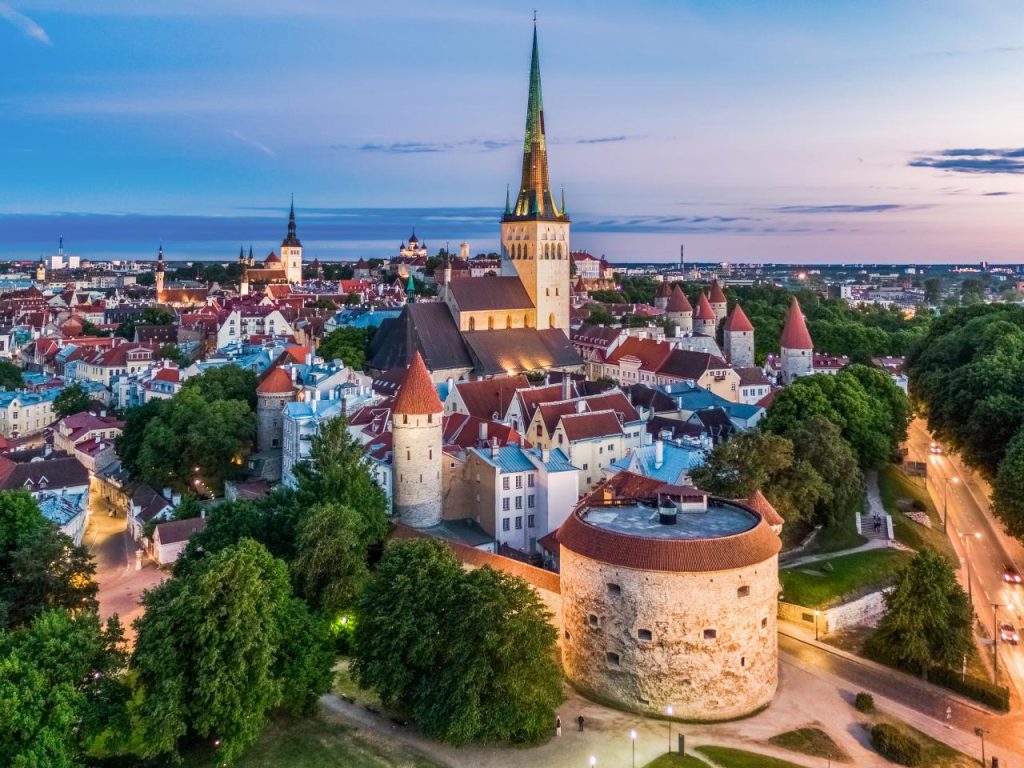
Readers of Condé Nast Traveller, one of the world’s best-known travel publications, have ranked Estonia seventh among Europe’s friendliest countries in 2026. Estonia has made the prestigious top ten for the second year in a row – last year, readers of the magazine voted Estonia the friendliest country in Europe. Condé Nast Traveller highlights Estonia’s historic cities, wild nature and islands, while praising Estonians for their politeness and respectful attitude towards visitors. The publication notes that Estonia first appeared in its ranking of Europe’s friendliest countries in 2025, immediately taking the top spot. “People may come to Estonia for the

Cybernetica has begun the third phase of the Minerva project in partnership with the European Space Agency (ESA). Building on more than five years of collaborative research, this phase marks a pivotal transition: from ground-based machine learning exploration to a deployable, real-time cybersecurity system embedded directly into spacecraft. The Minerva Dynamic Threat Detection System is a dedicated cybersecurity module designed to sit at the critical security boundary between a spacecraft’s communication system and its on-board computer (OBC). The project runs under ESA’s General Support Technology Programme (GSTP) and is active until 2029. From research to hardware Cybernetica’s partnership with ESA