
Industry loan
Make a bigger investment in production with less self-financing.
The industry loan helps your company make a larger investment even when the bank or leasing company will not finance the entire project. The EIS industry loan complements the bank or leasing financing, so you can invest with less self-financing and keep more of your company’s money for day-to-day operations.
NB! The industry loan for SMEs is subordinated to the bank loan, meaning the company starts repaying the EIS loan only after the bank loan has been repaid, providing a long grace period.
early repayment and refinancing allowed
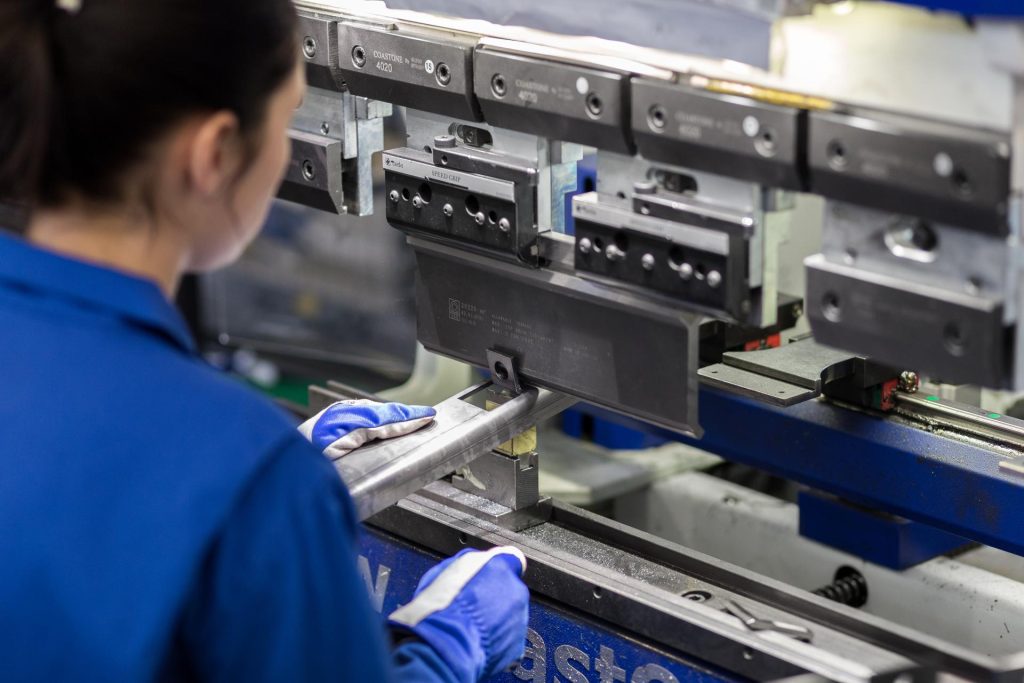
The industry loan can help if you want to:
- buy new production equipment;
- automate or digitalise production;
- increase production capacity, for example by building a new production facility;
- invest in new technology;
- invest in software or other intangible assets;
- make another major investment in your company’s growth.
Benefits
A subordinated loan that helps increase the project’s own contribution in the eyes of the credit institution
Less self-financing than usual, and in some cases none is needed
For who?
Service is suitable if
- the company is sustainable and solvent and
- equity capital meets the requirements set forth in the Commercial Code and
- the company’s equity capital and self-financing combined comprise at least 50% of the amount of the Industry Loan being sought and
- the company is entered into the Republic of Estonia’s Commercial Register and does not have arrears for which no payment schedule has been arranged and
- the company’s management board members are trustworthy and competent.
Important conditions
- primary production of agricultural products, fishery and aquaculture, and forestry
- manufacturing, processing and marketing of tobacco (and related products)
- manufacturing, processing and marketing of weapons and ammunition
- acquisition of means of transport and equipment used in road freight transport
- acquisition of vehicles
- companies engaged in financial and insurance activities
- gambling operators
- areas related to pornography, illegal data downloading and illegal access to data networks
- research and development in the field of healthcare with the aim of cloning humans or developing genetically modified organisms for scientific or medical purposes
- the objective of financing is to use domestic products instead of imported products
- export-related activities directly linked to the quantities exported, the establishment and operation of a distribution network or other current expenditure resulting from export if de minimis aid is granted by the issue of the surety
- decommissioning or construction of nuclear power plants
- investments to reduce greenhouse gas emissions generated in the areas of activity listed in Annex 1 to Directive 2003/87/EC8
- investments in airport infrastructure, unless they are linked to the protection of the environment or are accompanied by investments necessary to mitigate or reduce the negative environmental impact of airport infrastructure
- mining, production, processing, transport, storage, burning of fossil fuels
- waste disposal
- investments to increase the capacity of waste management facilities
- production of or trade in any product or activity that is illegal under national laws or international conventions and treaties
- production or business activities using forced or child labour
- trade in wild animals and wildlife products under the Convention on International Trade in Endangered Species of Wild Fauna and Flora (CITES)
- production and dissemination of racist, anti-democratic and/or neo-Nazi media
- The loan amount may not be used to pre-finance grants financed by the European Union;
- The project has not been fully implemented by the time the financing decision is made;
- In the case of land purchases, the cost of the land must not exceed 10% of the cost of the project;
- The project must not have a significant adverse effect on the achievement of environmental objectives, i.e. it must comply with the ‘do no significant harm’ principle;
- Climate proofing must be guaranteed in the case of infrastructure investments with a duration of at least five years and a total cost of more than €10,000,000.
- In the case of projects with a total cost of more than €500,000, the borrower is obliged to set up an information board at the location of the investment or equipment.
- Up to EUR 2 million; however, not more than 40% of the project cost
- In general, if EIS finances
- up to 20% of the cost of the project, interest is equal to the interest rate of the credit institution
- 20,01–30% of the cost of the project, interest is equal to the interest rate of the credit institution +1 percentage point
- 30,01–40% of the cost of the project, interest is equal to the interest rate of the credit institution +2 percentage points
- Up to 15 years; early repayment and refinancing are allowed.
- There is no fee for the conclusion and early termination of the contract
- The contract amendment fee is 0.2% of the outstanding balance, min €60.
A separate guarantee is usually not required for an Industry Loan, or a mortgage or commercial pledge is established as a last resort.
- Until the expiry of the loan agreement concluded with the credit institution, the principal instalments of the Industry Loan are subject to a grace period and only interest is payable.
- After the expiry of the loan agreement with the credit institution, the Industry Loan will be repaid in equal instalments according to a schedule.
Application process
To apply for an industry loan, first contact a bank or leasing company to get a decision on a bank loan or lease.
If the decision from the bank or leasing company is positive, a bank officer (generally) fills in the industry loan application (you can enter the e-services environment using your ID-card or Mobile-ID), attaching the following documents:
- financial forecasts on the EIS form
- business plan, including the investment project plan
- decision of the competent body of the credit or financing institution on the issuing of a loan or lease
- (audited) annual report for the last financial year
- an interim report for the current financial year, which is no more than three months old at the time of submission of the application
- CVs of the company’s key personnel.
Cooperation partners: Citadele Pank, Citadele Leasing Eesti branch, Coop Pank, LHV Pank, Luminor, SEB, SEB Liising, Swedbank and Swedbank Liising.
Good to know
- You can apply for a loan from EIS only if the application has received a positive financing decision from a bank or leasing company.
- Services offered by EIS may include state aid, including de minimis aid. More information is available on the “State aid and de minimis aid” page.
Teenuse info ja taotlusprotsess
Service is suitable if
- the company is sustainable and solvent and
- equity capital meets the requirements set forth in the Commercial Code and
- the company’s equity capital and self-financing combined comprise at least 50% of the amount of the Industry Loan being sought and
- the company is entered into the Republic of Estonia’s Commercial Register and does not have arrears for which no payment schedule has been arranged and
- the company’s management board members are trustworthy and competent.
- primary production of agricultural products, fishery and aquaculture, and forestry
- manufacturing, processing and marketing of tobacco (and related products)
- manufacturing, processing and marketing of weapons and ammunition
- acquisition of means of transport and equipment used in road freight transport
- acquisition of vehicles
- companies engaged in financial and insurance activities
- gambling operators
- areas related to pornography, illegal data downloading and illegal access to data networks
- research and development in the field of healthcare with the aim of cloning humans or developing genetically modified organisms for scientific or medical purposes
- the objective of financing is to use domestic products instead of imported products
- export-related activities directly linked to the quantities exported, the establishment and operation of a distribution network or other current expenditure resulting from export if de minimis aid is granted by the issue of the surety
- decommissioning or construction of nuclear power plants
- investments to reduce greenhouse gas emissions generated in the areas of activity listed in Annex 1 to Directive 2003/87/EC8
- investments in airport infrastructure, unless they are linked to the protection of the environment or are accompanied by investments necessary to mitigate or reduce the negative environmental impact of airport infrastructure
- mining, production, processing, transport, storage, burning of fossil fuels
- waste disposal
- investments to increase the capacity of waste management facilities
- production of or trade in any product or activity that is illegal under national laws or international conventions and treaties
- production or business activities using forced or child labour
- trade in wild animals and wildlife products under the Convention on International Trade in Endangered Species of Wild Fauna and Flora (CITES)
- production and dissemination of racist, anti-democratic and/or neo-Nazi media
- The loan amount may not be used to pre-finance grants financed by the European Union;
- The project has not been fully implemented by the time the financing decision is made;
- In the case of land purchases, the cost of the land must not exceed 10% of the cost of the project;
- The project must not have a significant adverse effect on the achievement of environmental objectives, i.e. it must comply with the ‘do no significant harm’ principle;
- Climate proofing must be guaranteed in the case of infrastructure investments with a duration of at least five years and a total cost of more than €10,000,000.
- In the case of projects with a total cost of more than €500,000, the borrower is obliged to set up an information board at the location of the investment or equipment.
- Up to EUR 2 million; however, not more than 40% of the project cost
- In general, if EIS finances
- up to 20% of the cost of the project, interest is equal to the interest rate of the credit institution
- 20,01–30% of the cost of the project, interest is equal to the interest rate of the credit institution +1 percentage point
- 30,01–40% of the cost of the project, interest is equal to the interest rate of the credit institution +2 percentage points
- Up to 15 years; early repayment and refinancing are allowed.
- There is no fee for the conclusion and early termination of the contract
- The contract amendment fee is 0.2% of the outstanding balance, min €60.
A separate guarantee is usually not required for an Industry Loan, or a mortgage or commercial pledge is established as a last resort.
- Until the expiry of the loan agreement concluded with the credit institution, the principal instalments of the Industry Loan are subject to a grace period and only interest is payable.
- After the expiry of the loan agreement with the credit institution, the Industry Loan will be repaid in equal instalments according to a schedule.
To apply for an industry loan, first contact a bank or leasing company to get a decision on a bank loan or lease.
If the decision from the bank or leasing company is positive, a bank officer (generally) fills in the industry loan application (you can enter the e-services environment using your ID-card or Mobile-ID), attaching the following documents:
- financial forecasts on the EIS form
- business plan, including the investment project plan
- decision of the competent body of the credit or financing institution on the issuing of a loan or lease
- (audited) annual report for the last financial year
- an interim report for the current financial year, which is no more than three months old at the time of submission of the application
- CVs of the company’s key personnel.
Cooperation partners: Citadele Pank, Citadele Leasing Eesti branch, Coop Pank, LHV Pank, Luminor, SEB, SEB Liising, Swedbank and Swedbank Liising.
- You can apply for a loan from EIS only if the application has received a positive financing decision from a bank or leasing company.
- Services offered by EIS may include state aid, including de minimis aid. More information is available on the “State aid and de minimis aid” page.
Case study: Waldchnep Ltd
Waldchnep is a good example that the idea of starting a company can be accidental, but with dedication and hard work, significant accomplishments are possible. Their decision to move to the border town undoubtedly solved several problems at once – the locals gained a stable employer, and the company’s expansion has not been hindered by a shortage of workforce.