Start-up Grant
We support the creation of start-ups with growth potential
We encourage start-ups to create jobs and contribute to sustainable revenue growth.
Please read the Start-up Grant FAQ
The total budget for the 2024 and 2026 application rounds was 10,011,428 euros.
The application process for the grant is closed.
Before submitting an application, it is necessary to undergo pre-consultation at a regional development centre.
Who is the grant intended for?
- For starting entrepreneurs (companies up to 3 years old).
- The grant cannot be applied for activities in the following fields of activity.
More detailed information about the fields can be found here (in Estonian) -
Legal entities may hold up to 25% participation.
-
Based on full-time equivalents, the company employs fewer than 10 people under employment contracts.
-
The turnover in the financial year immediately preceding the year of application was €40,000 or less.
-
The turnover in the financial year of application, as of the end of the quarter immediately preceding the quarter of submission, was €40,000 or less.
-
A shareholder must not have held or hold participation in, nor operate as an entrepreneur in, a company active in the same field of activity as the applicant during the 12 months immediately preceding the submission of the application.
-
A shareholder must not be a management board member of another company active in the same field of activity as the applicant.
-
A management board member must not hold or have held participation in, nor be a management board member of, another company active in the same field of activity as the applicant during the 12 months immediately preceding the submission of the application.
-
Within the last three years, the applicant must not have received de minimis aid exceeding €300,000.
- The project contributes to maintaining the core principles and achieving the objectives of Estonia 2035
What is the grant for?
-
The grant can be used for carrying out the actions and activities necessary to start a business (all activities and related expenses required for starting a business).
The start-up grant does not include a fixed list of eligible and ineligible costs. - It should be noted that only those activities and costs that do not significantly harm environmental objectives are eligible for support. Significant harm to environmental objectives under Article 17 can be found HERE. Regulation of the European Parliament and of the Council (EL) 2020/852
- The grant is provided on the basis of a standardized unit rate (the unit being the start of business, with a unit cost of €25,000, of which the grant amounts to €20,000).
- The support rate is 80%, therefore the co-financing requirement is 20%.
- The project period is 24 months.

Impact of the grant
Establishment of companies with growth potential
Growth potential – the capacity to achieve a turnover which, for an entrepreneur located in the Tallinn and Tartu urban areas, is at least €80,000 in the final year of the project eligibility period, and at least €40,000 in the rest of Estonia.
Job creation
Creation of at least one full-time equivalent job under an employment contract, with payment of the applicable minimum wage.
Information session
You can find the slides of the start-up grant information session (in Estonian) and the video (in Estonian)
Pre-consultation at the regional development centre
Before submitting an application, it is mandatory to undergo pre-consultation and obtain a preliminary assessment at the local regional development centre. After that, the application can be submitted in the e-support environment. Before completing the documents required for pre-consultation, please contact the business consultant of the regional development centre (contacts below).
For pre-consultation, please prepare the following documents:
- Business plan (digitally signed by the entrepreneur)
- Financial forecasts
- CVs / résumés (of shareholders and management board members)
The regional development centre conducting the pre-consultation will prepare a digitally signed assessment within 30 days of the submission of the above-mentioned documents. This assessment serves as proof of the completion of the pre-consultation.
Please contact the business consultant of the appropriate regional development centre:
Application submission
The application process for the grant is closed.
The application can be compiled and submitted in the online E-toetus environment
Grant can be applied only in Estonian language.
After completing the pre-consultation, the application can be submitted via the e-support environment. In addition to the application, the following documents (all in Estonian) must be submitted:
- Sample application form Application completion guide
- Preliminary assessment (digitally signed by a regional development centre employee)
- Business plan
- Financial forecasts
- Balance sheet and income statement as of the end of the quarter immediately preceding the application submission (if the company has no activity, then a zero balance sheet)
- CVs / résumés (of shareholders and management board members)
- Power of attorney sample (if the signatory of the application is not a representative of the applicant)
Evaluation of the application
We use artificial intelligence to assess eligible applications.
The final decision on whether or not to fund projects is made by the EIS.
The deadline for processing applications is 20 working days from the date of submission.
The evaluation criteria and their weight in the overall score are as follows:
We recommend reviewing the selection methodology before preparing the application to ensure that all aspects to be assessed are correctly reflected in the project.
Selection methodology (in Estonian)
Compliance with the publicity requirement
Having received a grant, you have an obligation to inform the public about the use of the grant.
Read more:
Notification of the Funding
A poster must be placed at the location of the project. The poster must be at least A3 in size and must include the logo “Co-financed by the European Union”, which must occupy at least 25 percent of the poster’s surface area. In addition, the name or brief description of the project. The poster must be displayed during the project’s eligibility period.
If the company has a website, it must also publish the logo with the words “Co-financed by the European Union”, a short description of the project, its objective, result and the amount of support.
If the company does not yet have a place of operation or a website, the announcement about the project funding can be published on the company’s social media account.
Project implementation – first instalment of the grant
The beneficiary shall submit an interim report in the e-support environment. The interim report must be submitted within four months of the decision approving the application. The interim report must demonstrate the creation of one full-time equivalent job within three months of the approval decision.
-
An employment contract signed by both parties
-
An extract from the Employment Register (TÖR) concerning the job related to the employment contract (available from the Estonian Tax and Customs Board e-services). More detailed information on employment registration can be found on the website of the Estonian Tax and Customs Board.
After the interim report has been approved, the first instalment of the grant (€15,000) will be disbursed. If the job has not been created, the grant will not be paid out.
Sample report form (for projects submitted from 2026)
Sample report form (for projects submitted earlier)
Verification of project results – second instalment of the grant
The beneficiary shall submit the final report in the e-support environment. The final report must be submitted within 30 calendar days after the end of the project eligibility period. The final report must demonstrate that the created full-time equivalent job has been paid at least the applicable minimum wage and that the growth potential has been achieved.
The following must be submitted:
-
Submit Form TSD Annex 1, or in the case of declared remuneration paid to a non-resident, Form TSD Annex 2, as well as the employment contract signed by both parties (if it was submitted with the interim report, it does not need to be submitted again). Forms TSD Annex 1 and Annex 2 can be obtained from the Estonian Tax and Customs Board’s e-service.
-
Income statements (to prove the turnover generated from the project’s field of activity during the second eligible project year).
After the approval of the final report, the second instalment of the grant (€5,000) will be disbursed.
Sample report form (for projects submitted from 2026)
Sample report form (for projects submitted earlier)
How to apply?
You can find the slides of the start-up grant information session (in Estonian) and the video (in Estonian)
Before submitting an application, it is mandatory to undergo pre-consultation and obtain a preliminary assessment at the local regional development centre. After that, the application can be submitted in the e-support environment. Before completing the documents required for pre-consultation, please contact the business consultant of the regional development centre (contacts below).
For pre-consultation, please prepare the following documents:
- Business plan (digitally signed by the entrepreneur)
- Financial forecasts
- CVs / résumés (of shareholders and management board members)
The regional development centre conducting the pre-consultation will prepare a digitally signed assessment within 30 days of the submission of the above-mentioned documents. This assessment serves as proof of the completion of the pre-consultation.
Please contact the business consultant of the appropriate regional development centre:
The application process for the grant is closed.
The application can be compiled and submitted in the online E-toetus environment
Grant can be applied only in Estonian language.
After completing the pre-consultation, the application can be submitted via the e-support environment. In addition to the application, the following documents (all in Estonian) must be submitted:
- Sample application form Application completion guide
- Preliminary assessment (digitally signed by a regional development centre employee)
- Business plan
- Financial forecasts
- Balance sheet and income statement as of the end of the quarter immediately preceding the application submission (if the company has no activity, then a zero balance sheet)
- CVs / résumés (of shareholders and management board members)
- Power of attorney sample (if the signatory of the application is not a representative of the applicant)
We use artificial intelligence to assess eligible applications.
The final decision on whether or not to fund projects is made by the EIS.
The deadline for processing applications is 20 working days from the date of submission.
The evaluation criteria and their weight in the overall score are as follows:
We recommend reviewing the selection methodology before preparing the application to ensure that all aspects to be assessed are correctly reflected in the project.
Selection methodology (in Estonian)
Having received a grant, you have an obligation to inform the public about the use of the grant.
Read more:
Notification of the Funding
A poster must be placed at the location of the project. The poster must be at least A3 in size and must include the logo “Co-financed by the European Union”, which must occupy at least 25 percent of the poster’s surface area. In addition, the name or brief description of the project. The poster must be displayed during the project’s eligibility period.
If the company has a website, it must also publish the logo with the words “Co-financed by the European Union”, a short description of the project, its objective, result and the amount of support.
If the company does not yet have a place of operation or a website, the announcement about the project funding can be published on the company’s social media account.
The beneficiary shall submit an interim report in the e-support environment. The interim report must be submitted within four months of the decision approving the application. The interim report must demonstrate the creation of one full-time equivalent job within three months of the approval decision.
-
An employment contract signed by both parties
-
An extract from the Employment Register (TÖR) concerning the job related to the employment contract (available from the Estonian Tax and Customs Board e-services). More detailed information on employment registration can be found on the website of the Estonian Tax and Customs Board.
After the interim report has been approved, the first instalment of the grant (€15,000) will be disbursed. If the job has not been created, the grant will not be paid out.
Sample report form (for projects submitted from 2026)
Sample report form (for projects submitted earlier)
The beneficiary shall submit the final report in the e-support environment. The final report must be submitted within 30 calendar days after the end of the project eligibility period. The final report must demonstrate that the created full-time equivalent job has been paid at least the applicable minimum wage and that the growth potential has been achieved.
The following must be submitted:
-
Submit Form TSD Annex 1, or in the case of declared remuneration paid to a non-resident, Form TSD Annex 2, as well as the employment contract signed by both parties (if it was submitted with the interim report, it does not need to be submitted again). Forms TSD Annex 1 and Annex 2 can be obtained from the Estonian Tax and Customs Board’s e-service.
-
Income statements (to prove the turnover generated from the project’s field of activity during the second eligible project year).
After the approval of the final report, the second instalment of the grant (€5,000) will be disbursed.
Sample report form (for projects submitted from 2026)
Sample report form (for projects submitted earlier)
Support for applicants
Please include the company name, planned activities, investment needs, and a short overview of your idea when contacting us. This helps us assist you more effectively.
Before reaching out, please review the support conditions.
For quick communication, you can find the chatbot in the bottom right corner of the page.
Customer Service
[email protected]
627 9700
Read more about the terms and conditions of the grant in the grant regulation:
Please read the Start-up Grant FAQ
Discover which projects we have supported over the years and to what extent.
Find out more
News
Explore
Estonia has long planned how to use land and sea, but beneath the surface lies another layer of space with largely untapped potential for innovation and new business. According to Kati Kongi, Head of the Research, Development and Innovation Department at Enterprise Estonia, Estonia already has a strong foundation for exploring this potential. Former mines, existing underground infrastructure and new developments such as Zero Terrain in Paldiski create opportunities ranging from energy storage and data centres to circular economy solutions and resilient critical infrastructure. However, there is no one-size-fits-all solution. Every location comes with its own geological conditions, technical constraints
What if underground infrastructure built for one purpose could create opportunities for several others? For Andres Veske, CEO of Zero Terrain, this is one of the key questions behind the company’s involvement in the Underground Innovation Hackathon. Zero Terrain develops underground pumped hydro storage, where energy is stored by moving water between reservoirs. Its flagship Energiasalv project in Paldiski is a 500 MW / 15 GWh underground energy storage facility and an EU Project of Common Interest (PCI). The lower reservoir is planned deep in the bedrock, at around 600 metres below ground. The project requires extensive underground infrastructure, including
Enterprise Estonia (EIS) is inviting international teams to take part in the first Underground Innovation Hackathon, aimed at developing new technologies and business opportunities for the use of underground space. Applications are open until 23 November. The hackathon brings together entrepreneurs, researchers and experts from different fields to develop ideas that can grow into real-world projects and businesses. Underground space is not just about mines, tunnels and utility networks. It increasingly offers opportunities for energy storage, data centres, circular economy solutions and strengthening the resilience of critical infrastructure. At the heart of the hackathon is one question: how can we
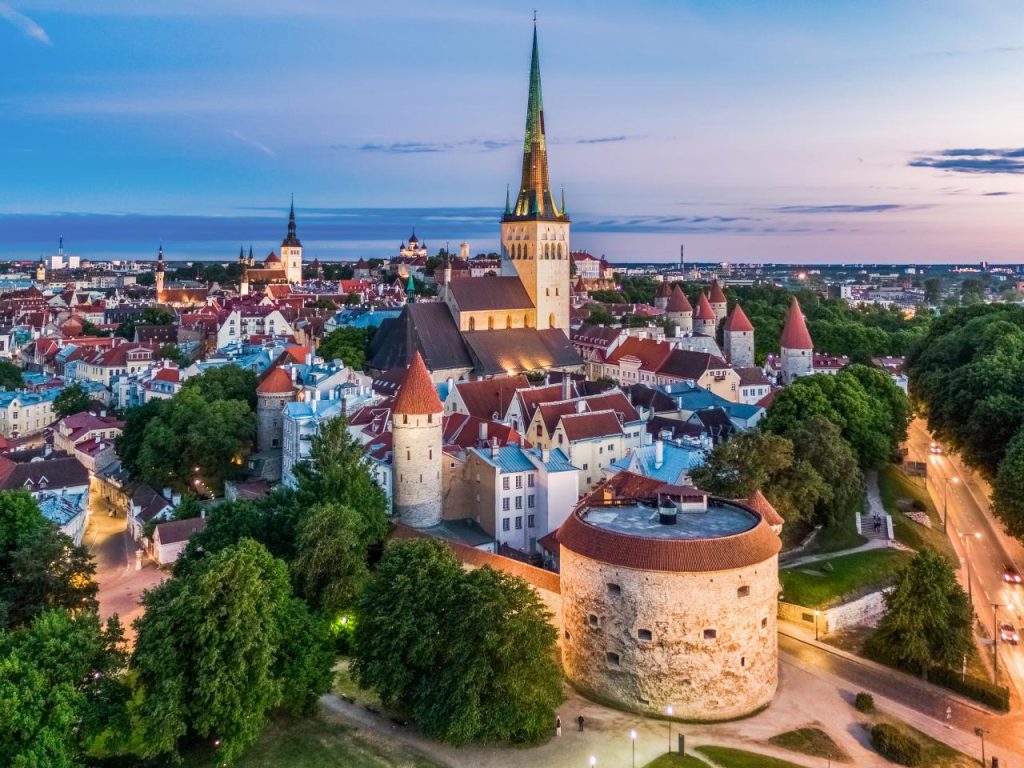
Readers of Condé Nast Traveller, one of the world’s best-known travel publications, have ranked Estonia seventh among Europe’s friendliest countries in 2026. Estonia has made the prestigious top ten for the second year in a row – last year, readers of the magazine voted Estonia the friendliest country in Europe. Condé Nast Traveller highlights Estonia’s historic cities, wild nature and islands, while praising Estonians for their politeness and respectful attitude towards visitors. The publication notes that Estonia first appeared in its ranking of Europe’s friendliest countries in 2025, immediately taking the top spot. “People may come to Estonia for the

Cybernetica has begun the third phase of the Minerva project in partnership with the European Space Agency (ESA). Building on more than five years of collaborative research, this phase marks a pivotal transition: from ground-based machine learning exploration to a deployable, real-time cybersecurity system embedded directly into spacecraft. The Minerva Dynamic Threat Detection System is a dedicated cybersecurity module designed to sit at the critical security boundary between a spacecraft’s communication system and its on-board computer (OBC). The project runs under ESA’s General Support Technology Programme (GSTP) and is active until 2029. From research to hardware Cybernetica’s partnership with ESA