Digitalisation
Digitalisation is one of the key factors in gaining a competitive edge and has become a natural part of a company’s daily operations today.

Digitalisation is one of the key factors in gaining a competitive edge and has become a natural part of a company’s daily operations today.

By digitalisation we mean the development of an organisation’s business processes through the use of information technology and innovative automation. This enables data-driven decision-making, greater efficiency, and increased flexibility in responding to market changes. Time saved from manual and routine tasks improves work quality and creates new valuable opportunities, making the company more competitive.
All companies face the stages of digitalisation – from service providers to industrial enterprises moving toward Industry 5.0 – regardless of their core activity, size, or type.
Industrial digitalisation goes beyond simply adopting new robots or software; it also involves the smart use of data and the creation of innovative solutions and technologies. Collecting and analysing data makes it possible to better understand customer needs, predict market trends, and implement new business models. Smart data management and cybersecurity ensure data reliability, enable the successful adoption of AI-driven solutions, and protect the company against cyber threats.
Enables you to focus on more complex tasks, bring new products to market faster, and respond to market changes.
Automated processes and smart inventory management help significantly reduce operating costs.
Real-time data availability and analytics capabilities enable managers to make faster, more informed decisions.
Digitalisation helps optimise resource use, reduce energy consumption, and lower the CO₂ footprint.
Challenge:
How to improve process efficiency, management quality, and make strategic, data-driven business decisions?
Solutions:
Benefits:
Challenge:
How to ensure data protection and security, while reducing data processing delays and server load?
Solutions:
Benefits:
Challenge:
How to optimise industrial processes, production lines, and manufacturing flexibility?
Solutions:
Benefits:
Challenge:
How to ensure real-time process monitoring and fast, secure data transfer for quicker management decisions? How to improve the quality of decision-making in real time?
Solutions:
Benefits:
Challenge:
For every business leader, the daily challenge lies in planning, optimising, managing, monitoring, and controlling resources and processes across the entire supply chain.
Solutions:
Cyber-physical systems and integrated software systems are designed to create seamless data flow both within the company and across the supply chain. Integrated software solutions enable real-time information exchange and help eliminate duplicate data entry at different supply chain stages, thus improving data quality. Horizontal and vertical integration has been described as the “backbone of Industry 4.0.” Machines and companies communicate and constantly share data, supporting deeper analytics, greater transparency, and higher efficiency for all parties.
For example, if a company has multiple production sites, integration ensures smooth sharing of information such as inventory levels, delays, and more. This allows businesses to provide reliable information to clients and supply chain partners while making strategic, data-driven decisions at the management level.
Horizontally and vertically integrated systems are also the foundation for building a fully automated supply chain — from supplier to customer, and from top-level management to the production floor.
Challenge:
How to improve process efficiency, management quality, and make strategic, data-driven business decisions?
Solutions:
Benefits:
Challenge:
How to ensure data protection and security, while reducing data processing delays and server load?
Solutions:
Benefits:
Challenge:
How to optimise industrial processes, production lines, and manufacturing flexibility?
Solutions:
Benefits:
Challenge:
How to ensure real-time process monitoring and fast, secure data transfer for quicker management decisions? How to improve the quality of decision-making in real time?
Solutions:
Benefits:
Challenge:
For every business leader, the daily challenge lies in planning, optimising, managing, monitoring, and controlling resources and processes across the entire supply chain.
Solutions:
Cyber-physical systems and integrated software systems are designed to create seamless data flow both within the company and across the supply chain. Integrated software solutions enable real-time information exchange and help eliminate duplicate data entry at different supply chain stages, thus improving data quality. Horizontal and vertical integration has been described as the “backbone of Industry 4.0.” Machines and companies communicate and constantly share data, supporting deeper analytics, greater transparency, and higher efficiency for all parties.
For example, if a company has multiple production sites, integration ensures smooth sharing of information such as inventory levels, delays, and more. This allows businesses to provide reliable information to clients and supply chain partners while making strategic, data-driven decisions at the management level.
Horizontally and vertically integrated systems are also the foundation for building a fully automated supply chain — from supplier to customer, and from top-level management to the production floor.

In addition to integrating and adopting digital solutions, it is equally important to focus on the growth of IT solutions through continuous development activities. Enterprise Estonia aligns its actions with the Research, Development, Innovation and Entrepreneurship Strategy RDIE 2035, where one of the priority areas is the application of digital solutions across all sectors of life. The goal is to develop innovative, high value-added IT systems, products, and technologies that support sectoral growth and enhance business competitiveness. This focus area is strengthened by technological developments, where challenges and solutions are driven by research and development — including artificial intelligence, digital twins, and cyber-physical systems.
Supporting digital transition and knowledge transfer encourages the creation of solutions based on new technologies, while also fostering interest and readiness to engage in continuous research and development activities.

Estonia has long planned how to use land and sea, but beneath the surface lies another layer of space with largely untapped potential for innovation and new business. According to Kati Kongi, Head of the Research, Development and Innovation Department at Enterprise Estonia, Estonia already has a strong foundation for exploring this potential. Former mines, existing underground infrastructure and new developments such as Zero Terrain in Paldiski create opportunities ranging from energy storage and data centres to circular economy solutions and resilient critical infrastructure. However, there is no one-size-fits-all solution. Every location comes with its own geological conditions, technical constraints

What if underground infrastructure built for one purpose could create opportunities for several others? For Andres Veske, CEO of Zero Terrain, this is one of the key questions behind the company’s involvement in the Underground Innovation Hackathon. Zero Terrain develops underground pumped hydro storage, where energy is stored by moving water between reservoirs. Its flagship Energiasalv project in Paldiski is a 500 MW / 15 GWh underground energy storage facility and an EU Project of Common Interest (PCI). The lower reservoir is planned deep in the bedrock, at around 600 metres below ground. The project requires extensive underground infrastructure, including
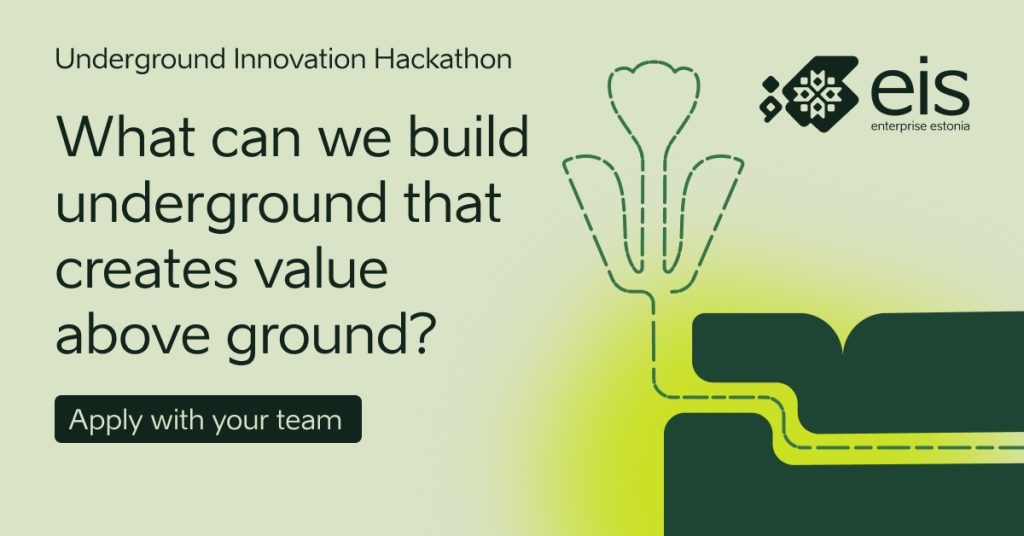
Enterprise Estonia (EIS) is inviting international teams to take part in the first Underground Innovation Hackathon, aimed at developing new technologies and business opportunities for the use of underground space. Applications are open until 23 November. The hackathon brings together entrepreneurs, researchers and experts from different fields to develop ideas that can grow into real-world projects and businesses. Underground space is not just about mines, tunnels and utility networks. It increasingly offers opportunities for energy storage, data centres, circular economy solutions and strengthening the resilience of critical infrastructure. At the heart of the hackathon is one question: how can we
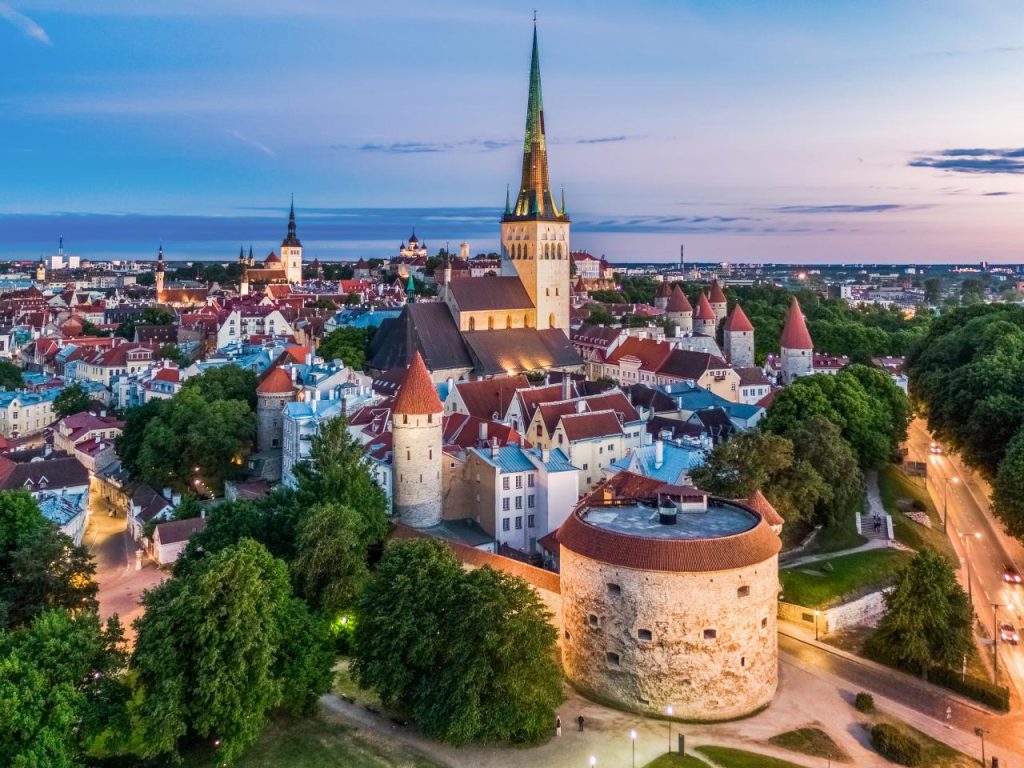
Readers of Condé Nast Traveller, one of the world’s best-known travel publications, have ranked Estonia seventh among Europe’s friendliest countries in 2026. Estonia has made the prestigious top ten for the second year in a row – last year, readers of the magazine voted Estonia the friendliest country in Europe. Condé Nast Traveller highlights Estonia’s historic cities, wild nature and islands, while praising Estonians for their politeness and respectful attitude towards visitors. The publication notes that Estonia first appeared in its ranking of Europe’s friendliest countries in 2025, immediately taking the top spot. “People may come to Estonia for the

Cybernetica has begun the third phase of the Minerva project in partnership with the European Space Agency (ESA). Building on more than five years of collaborative research, this phase marks a pivotal transition: from ground-based machine learning exploration to a deployable, real-time cybersecurity system embedded directly into spacecraft. The Minerva Dynamic Threat Detection System is a dedicated cybersecurity module designed to sit at the critical security boundary between a spacecraft’s communication system and its on-board computer (OBC). The project runs under ESA’s General Support Technology Programme (GSTP) and is active until 2029. From research to hardware Cybernetica’s partnership with ESA
