together with technological consulting for product and service development.
Innovation grant
We support the creation of innovative solutions!
We support entrepreneurs’ cooperation with research institutions, test laboratories, or intellectual property experts to test new materials, gather knowledge on technological feasibility, conduct studies, and more.
Maximum grant
7 500
Self-financing
20%
Total grant amount
3 254 309
Status
Open
Who is the support intended for?
- The innovation voucher is a targeted support to procure services necessary for product development from an innovation service provider
- support can be granted to a project aimed at developing an innovative solution that falls under at least one of the TAIE focus areas and for the implementation of which the applicant lacks resources, knowledge, skills, or experience
- the project contributes to upholding the principles of estonia 2035 and achieving its goals (read more)
- The applicant must be a small or medium-sized enterprise registered in the Estonian Business Register
- Support can be applied for up to two times
- During the past three years, the applicant must not have received more than 300,000 euros in de minimis aid
What can the support be used for?
- prototype development
- technological development, testing, and demonstration of components
- organization of product testing and industrial experimentation, conducting a feasibility study
- legal consulting, research, and registration related to patents, utility models, or industrial designs
- accreditation, certification, standardization, conformity assessment, metrology service
Support rate: the grant covers up to 80% of eligible costs.

Who can be the service providers?

- Estonian standardization organization, Estonian National Metrology Institute and accredited calibration and testing laboratories, patent commissioners
- Technology development centers, positively evaluated research and development institutions, competence centers
- Applied higher education institutions, universities, and colleges (research and development institutions established as a state authority, a local government authority, a legal person in public law, or an agency of a legal person in public law)
- calibration and testing laboratories of other European Union countries that are accredited
- Legal entities providing engineering services
- List of potential service providers
What will change in my company?
Greater competitiveness
Cooperation with research institutions
Greater added value of the product or service
Assistance for applicant
Please include the company name, planned activities, investment needs, and a short overview of your idea when contacting us. This helps us assist you more effectively.
Before reaching out, please review the support conditions.
For quick communication, you can find the chatbot in the bottom right corner of the page.
Customer Service
klienditeenindus@eis.ee
627 9700
Read more about the terms and conditions of the grant in the grant regulation:
Grant regulationRead more about applying grant in Estonian here
The application can be compiled and submitted in the online E-toetus environment
Grant can be applied only in Estonian language.
Discover which projects we have supported over the years and their scope.
Find out more
News
Explore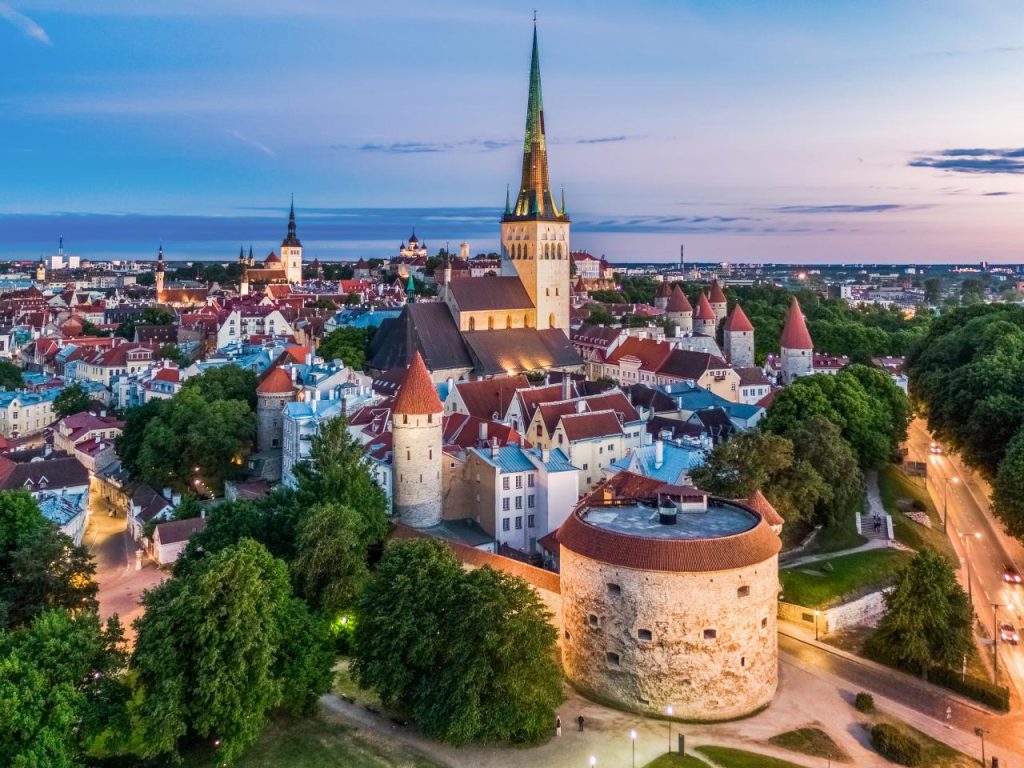
Readers of Condé Nast Traveller, one of the world’s best-known travel publications, have ranked Estonia seventh among Europe’s friendliest countries in 2026. Estonia has made the prestigious top ten for the second year in a row – last year, readers of the magazine voted Estonia the friendliest country in Europe. Condé Nast Traveller highlights Estonia’s historic cities, wild nature and islands, while praising Estonians for their politeness and respectful attitude towards visitors. The publication notes that Estonia first appeared in its ranking of Europe’s friendliest countries in 2025, immediately taking the top spot. “People may come to Estonia for the

Cybernetica has begun the third phase of the Minerva project in partnership with the European Space Agency (ESA). Building on more than five years of collaborative research, this phase marks a pivotal transition: from ground-based machine learning exploration to a deployable, real-time cybersecurity system embedded directly into spacecraft. The Minerva Dynamic Threat Detection System is a dedicated cybersecurity module designed to sit at the critical security boundary between a spacecraft’s communication system and its on-board computer (OBC). The project runs under ESA’s General Support Technology Programme (GSTP) and is active until 2029. From research to hardware Cybernetica’s partnership with ESA

As Brussels prepares for the summer break, work across the European Union institutions continues at full speed. Decisions currently being shaped will influence Europe’s business, industrial and innovation landscape for years to come. Since 1 July 2026, Ireland has held the Presidency of the Council of the European Union. Over the next six months, Ireland will steer discussions on several strategic priorities that are highly relevant for Estonian businesses, including strengthening Europe’s competitiveness, accelerating innovation, increasing investment, developing the defence industry, and preparing the EU’s next long-term budget. Although each Presidency lasts only six months, it often sets the political

Estonia ranked 11th among EU member states in the newly released 2026 European Innovation Scoreboard and kept its place in the Strong Innovator group, with a summary innovation index equal to 108.6% of the EU average. In its press release, the European Commission said the EU’s overall innovation performance has risen by 11.6 percentage points since 2019 and by 1.7 points over the past year. For Estonia, the new country profile shows a system that continues to outperform the EU average, while still sitting slightly below the Strong Innovator group average of 113.9%. Estonia also ranked 15th across the EU and neighbouring countries covered by

Kristel Oitmaa, the new head of Enterprise Estonia’s (EIS) Brussels office, helps Estonian companies better understand and use opportunities related to EU research and development — whether it is funding, strategic information, international cooperation, or access to key networks. In this interview, Kristel explains what the Brussels office actually does, what her role involves, and what Estonian companies can do to become more visible at the European level. While EIS export advisors focus on market entry, Kristel supports Estonian companies in navigating the European strategic landscape. She helps them use European opportunities in a more informed and effective way, ensuring