Product development grant for defence-industry companies
We support the development of defence-industry companies
We are encouraging entrepreneurs to invest more in development activities that result in a new or substantially modified product or service that is internationally competitive.
The application process for the grant is ongoing.
A preliminary consultation must be attended before submitting an application.
The grant can be applied for in any amount from 250,000 to 3,000,000 euros.
Information about programme for applied research with support up to 2 000 000 euros here
Information about programme for applied research: small projects with support up to 250 000 euros here
Who is the grant intended for?
- Companies listed in the Estonian Commercial Register
- Before submitting an application, a company must attend a consultation
- the project contributes to upholding the principles of estonia 2035 and achieving its goals (read more)

What Types of Projects Are We Looking For?
- Drone technology solutions and cost-effective drone manufacturing technologies
- Urban-based electronic warfare (EW) defence solutions
- Development of combat systems
- Solutions that enhance unit situational awareness
- Development of explosives, explosive materials, and the production of ammunition and munitions
- Deception devices (including imitation devices and electronic decoys)
- Tactical food supplies and soldier equipment (including medical supplies)
- National security platforms
- Unmanned vehicles
- Cybersecurity and software (e.g., simulation environments, communications)
What is the grant designed for?
- Conducting applied research
- Developing a product
- Carrying out a feasibility study
- Applying for the primary protection of intellectual property linked to applied research or product development
What qualifies for a grant?
Proportion of applied research grant depending on the size of the company:
- 70% (small business)
- 60% (medium business)
- 50% (large business)
Proportion of applied research grant depending on the size of the company in the context of effective cooperation:
- 80% (small)
- 75% (medium)
- 65% (large)
Proportion of product development grant depending on the size of the company:
- 45% (small)
- 35% (medium)
- 25% (large)
Proportion of product development grant depending on the size of the company in the context of effective cooperation:
- 60% (small)
- 50% (medium)
- 40% (large)
We will grant support for conducting feasibility studies as a preliminary step for conducting applied research or developing products. Grants are only given to feasibility studies that precede applied research or product evelopment activities.
- 70% (small)
- 60% (medium)
- 50% (large)
Primary protection of intellectual property can be applied for if applied research or product development activities are carried out within the framework of the project.
The percentage of support for this grant is 50% if support is applied under GBER (applies for SMEs only) or 80% if support is applied under de minimis aid (applies to all enterprises).
What will change in my company?
Company will produce a competitive product or service
Company will benefit from greater innovation capacity
Company will be become more competitive internationally
Assistance for applicant
Please include the company name, planned activities, investment needs, and a short overview of your idea when contacting us. This helps us assist you more effectively.
Before reaching out, please review the support conditions.
For quick communication, you can find the chatbot in the bottom right corner of the page.
Customer Service
+372 627 9700
[email protected]
Read more about the terms and conditions of the grant in the grant regulation:
Activities will be considered effective cooperation under the General Block Exception Regulations if the project is carried out:
- between independent entrepreneurs, at least one of whom is an SME (small or medium sized enterprise), or if the project is carried out in at least two European Union Member States or a European Union Member State and a country involved in the European Comprehensive Trade and Economic Agreement and neither entrepreneur carries over 70% of the eligible costs
- or between an entrepreneur and at least one R&D establishment that bears at least 10% of all eligible costs and who has the right to publish the results of their activities
Read more about applying grant in Estonian here
The application can be compiled and submitted in the online E-toetus environment
The application may be submitted after completing the mandatory preliminary consultation and receiving a preliminary assessment.
The project plan attached to the application must have received a positive preliminary assessment during the preliminary consultation.
Please prepare the documents in advance:
Find more information about the previous projects and the grants they received here:

News
Explore
Estonia has long planned how to use land and sea, but beneath the surface lies another layer of space with largely untapped potential for innovation and new business. According to Kati Kongi, Head of the Research, Development and Innovation Department at Enterprise Estonia, Estonia already has a strong foundation for exploring this potential. Former mines, existing underground infrastructure and new developments such as Zero Terrain in Paldiski create opportunities ranging from energy storage and data centres to circular economy solutions and resilient critical infrastructure. However, there is no one-size-fits-all solution. Every location comes with its own geological conditions, technical constraints

What if underground infrastructure built for one purpose could create opportunities for several others? For Andres Veske, CEO of Zero Terrain, this is one of the key questions behind the company’s involvement in the Underground Innovation Hackathon. Zero Terrain develops underground pumped hydro storage, where energy is stored by moving water between reservoirs. Its flagship Energiasalv project in Paldiski is a 500 MW / 15 GWh underground energy storage facility and an EU Project of Common Interest (PCI). The lower reservoir is planned deep in the bedrock, at around 600 metres below ground. The project requires extensive underground infrastructure, including
Enterprise Estonia (EIS) is inviting international teams to take part in the first Underground Innovation Hackathon, aimed at developing new technologies and business opportunities for the use of underground space. Applications are open until 23 November. The hackathon brings together entrepreneurs, researchers and experts from different fields to develop ideas that can grow into real-world projects and businesses. Underground space is not just about mines, tunnels and utility networks. It increasingly offers opportunities for energy storage, data centres, circular economy solutions and strengthening the resilience of critical infrastructure. At the heart of the hackathon is one question: how can we
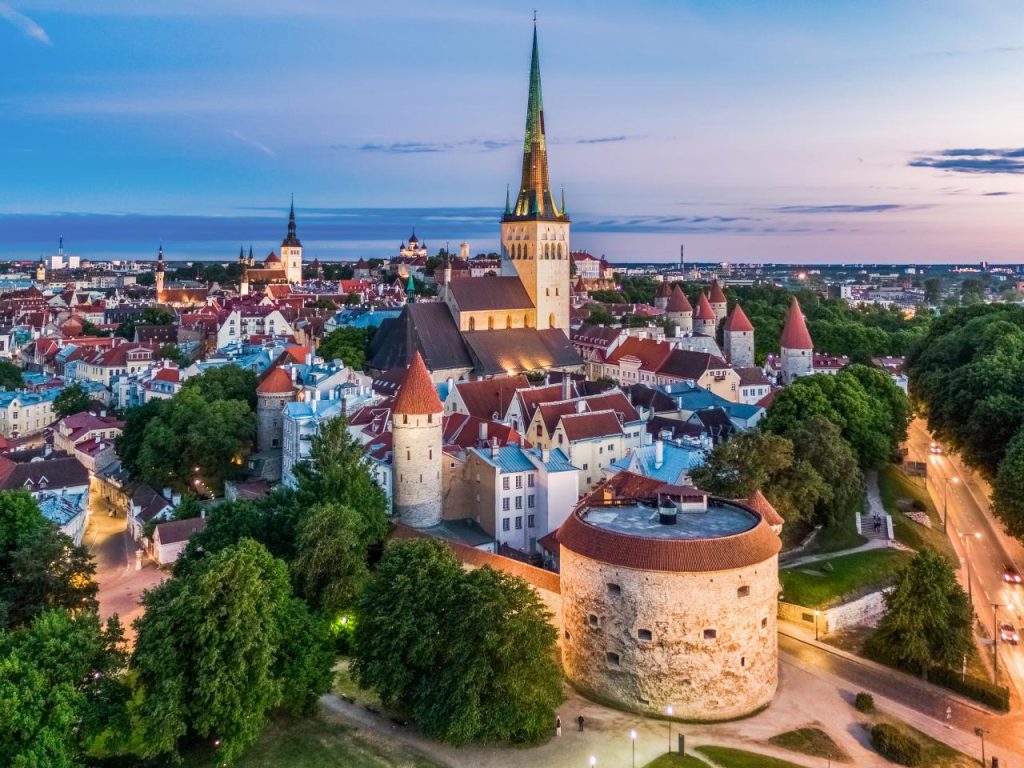
Readers of Condé Nast Traveller, one of the world’s best-known travel publications, have ranked Estonia seventh among Europe’s friendliest countries in 2026. Estonia has made the prestigious top ten for the second year in a row – last year, readers of the magazine voted Estonia the friendliest country in Europe. Condé Nast Traveller highlights Estonia’s historic cities, wild nature and islands, while praising Estonians for their politeness and respectful attitude towards visitors. The publication notes that Estonia first appeared in its ranking of Europe’s friendliest countries in 2025, immediately taking the top spot. “People may come to Estonia for the

Cybernetica has begun the third phase of the Minerva project in partnership with the European Space Agency (ESA). Building on more than five years of collaborative research, this phase marks a pivotal transition: from ground-based machine learning exploration to a deployable, real-time cybersecurity system embedded directly into spacecraft. The Minerva Dynamic Threat Detection System is a dedicated cybersecurity module designed to sit at the critical security boundary between a spacecraft’s communication system and its on-board computer (OBC). The project runs under ESA’s General Support Technology Programme (GSTP) and is active until 2029. From research to hardware Cybernetica’s partnership with ESA