Digitalisation
Digitalisation is one of the key factors in gaining a competitive edge and has become a natural part of a company’s daily operations today.

Digitalisation is one of the key factors in gaining a competitive edge and has become a natural part of a company’s daily operations today.

By digitalisation we mean the development of an organisation’s business processes through the use of information technology and innovative automation. This enables data-driven decision-making, greater efficiency, and increased flexibility in responding to market changes. Time saved from manual and routine tasks improves work quality and creates new valuable opportunities, making the company more competitive.
All companies face the stages of digitalisation – from service providers to industrial enterprises moving toward Industry 5.0 – regardless of their core activity, size, or type.
Industrial digitalisation goes beyond simply adopting new robots or software; it also involves the smart use of data and the creation of innovative solutions and technologies. Collecting and analysing data makes it possible to better understand customer needs, predict market trends, and implement new business models. Smart data management and cybersecurity ensure data reliability, enable the successful adoption of AI-driven solutions, and protect the company against cyber threats.
Enables you to focus on more complex tasks, bring new products to market faster, and respond to market changes.
Automated processes and smart inventory management help significantly reduce operating costs.
Real-time data availability and analytics capabilities enable managers to make faster, more informed decisions.
Digitalisation helps optimise resource use, reduce energy consumption, and lower the CO₂ footprint.
Challenge:
How to improve process efficiency, management quality, and make strategic, data-driven business decisions?
Solutions:
Benefits:
Challenge:
How to ensure data protection and security, while reducing data processing delays and server load?
Solutions:
Benefits:
Challenge:
How to optimise industrial processes, production lines, and manufacturing flexibility?
Solutions:
Benefits:
Challenge:
How to ensure real-time process monitoring and fast, secure data transfer for quicker management decisions? How to improve the quality of decision-making in real time?
Solutions:
Benefits:
Challenge:
For every business leader, the daily challenge lies in planning, optimising, managing, monitoring, and controlling resources and processes across the entire supply chain.
Solutions:
Cyber-physical systems and integrated software systems are designed to create seamless data flow both within the company and across the supply chain. Integrated software solutions enable real-time information exchange and help eliminate duplicate data entry at different supply chain stages, thus improving data quality. Horizontal and vertical integration has been described as the “backbone of Industry 4.0.” Machines and companies communicate and constantly share data, supporting deeper analytics, greater transparency, and higher efficiency for all parties.
For example, if a company has multiple production sites, integration ensures smooth sharing of information such as inventory levels, delays, and more. This allows businesses to provide reliable information to clients and supply chain partners while making strategic, data-driven decisions at the management level.
Horizontally and vertically integrated systems are also the foundation for building a fully automated supply chain — from supplier to customer, and from top-level management to the production floor.
Challenge:
How to improve process efficiency, management quality, and make strategic, data-driven business decisions?
Solutions:
Benefits:
Challenge:
How to ensure data protection and security, while reducing data processing delays and server load?
Solutions:
Benefits:
Challenge:
How to optimise industrial processes, production lines, and manufacturing flexibility?
Solutions:
Benefits:
Challenge:
How to ensure real-time process monitoring and fast, secure data transfer for quicker management decisions? How to improve the quality of decision-making in real time?
Solutions:
Benefits:
Challenge:
For every business leader, the daily challenge lies in planning, optimising, managing, monitoring, and controlling resources and processes across the entire supply chain.
Solutions:
Cyber-physical systems and integrated software systems are designed to create seamless data flow both within the company and across the supply chain. Integrated software solutions enable real-time information exchange and help eliminate duplicate data entry at different supply chain stages, thus improving data quality. Horizontal and vertical integration has been described as the “backbone of Industry 4.0.” Machines and companies communicate and constantly share data, supporting deeper analytics, greater transparency, and higher efficiency for all parties.
For example, if a company has multiple production sites, integration ensures smooth sharing of information such as inventory levels, delays, and more. This allows businesses to provide reliable information to clients and supply chain partners while making strategic, data-driven decisions at the management level.
Horizontally and vertically integrated systems are also the foundation for building a fully automated supply chain — from supplier to customer, and from top-level management to the production floor.

In addition to integrating and adopting digital solutions, it is equally important to focus on the growth of IT solutions through continuous development activities. Enterprise Estonia aligns its actions with the Research, Development, Innovation and Entrepreneurship Strategy RDIE 2035, where one of the priority areas is the application of digital solutions across all sectors of life. The goal is to develop innovative, high value-added IT systems, products, and technologies that support sectoral growth and enhance business competitiveness. This focus area is strengthened by technological developments, where challenges and solutions are driven by research and development — including artificial intelligence, digital twins, and cyber-physical systems.
Supporting digital transition and knowledge transfer encourages the creation of solutions based on new technologies, while also fostering interest and readiness to engage in continuous research and development activities.
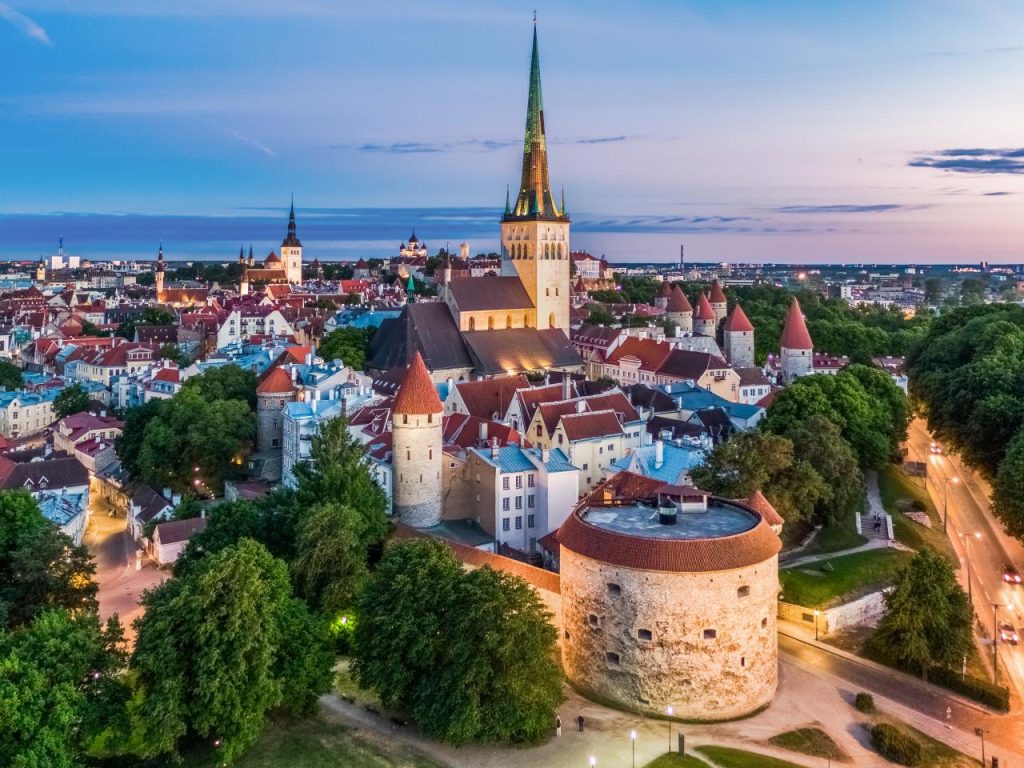
Readers of Condé Nast Traveller, one of the world’s best-known travel publications, have ranked Estonia seventh among Europe’s friendliest countries in 2026. Estonia has made the prestigious top ten for the second year in a row – last year, readers of the magazine voted Estonia the friendliest country in Europe. Condé Nast Traveller highlights Estonia’s historic cities, wild nature and islands, while praising Estonians for their politeness and respectful attitude towards visitors. The publication notes that Estonia first appeared in its ranking of Europe’s friendliest countries in 2025, immediately taking the top spot. “People may come to Estonia for the

Cybernetica has begun the third phase of the Minerva project in partnership with the European Space Agency (ESA). Building on more than five years of collaborative research, this phase marks a pivotal transition: from ground-based machine learning exploration to a deployable, real-time cybersecurity system embedded directly into spacecraft. The Minerva Dynamic Threat Detection System is a dedicated cybersecurity module designed to sit at the critical security boundary between a spacecraft’s communication system and its on-board computer (OBC). The project runs under ESA’s General Support Technology Programme (GSTP) and is active until 2029. From research to hardware Cybernetica’s partnership with ESA

As Brussels prepares for the summer break, work across the European Union institutions continues at full speed. Decisions currently being shaped will influence Europe’s business, industrial and innovation landscape for years to come. Since 1 July 2026, Ireland has held the Presidency of the Council of the European Union. Over the next six months, Ireland will steer discussions on several strategic priorities that are highly relevant for Estonian businesses, including strengthening Europe’s competitiveness, accelerating innovation, increasing investment, developing the defence industry, and preparing the EU’s next long-term budget. Although each Presidency lasts only six months, it often sets the political

Estonia ranked 11th among EU member states in the newly released 2026 European Innovation Scoreboard and kept its place in the Strong Innovator group, with a summary innovation index equal to 108.6% of the EU average. In its press release, the European Commission said the EU’s overall innovation performance has risen by 11.6 percentage points since 2019 and by 1.7 points over the past year. For Estonia, the new country profile shows a system that continues to outperform the EU average, while still sitting slightly below the Strong Innovator group average of 113.9%. Estonia also ranked 15th across the EU and neighbouring countries covered by

This October, Estonian deep tech startups will head to Singapore as part of Startup Estonia’s Nordic Deep Tech Valley program to take part in the Nordic Singapore Innovation Days 2025 — a joint initiative with Finland and Sweden. According to Kati Pärn, Nordic Partnerships Lead at Startup Estonia, the event will connect Nordic startups with Singaporean corporations and investors to foster business opportunities and partnerships in green and sustainable innovation. “Our aim is to provide Estonian startups operating in the complex and highly competitive deep tech sector with a concrete opportunity to secure new investors, partners, and clients in Asian
